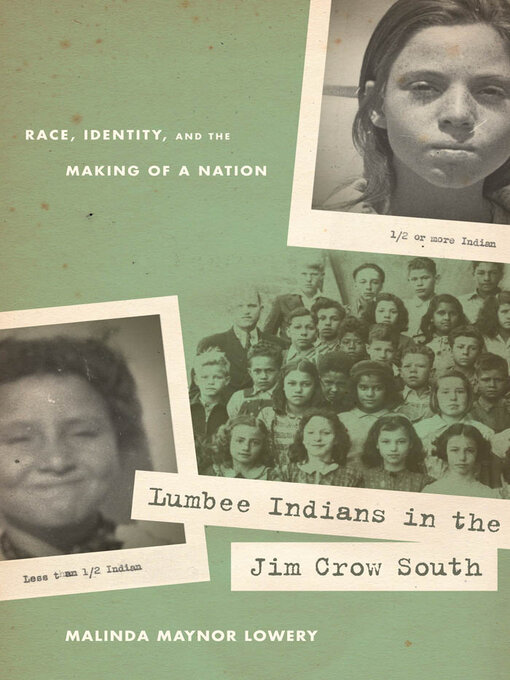
With more than 50,000 enrolled members, North Carolina’s Lumbee Indians are the largest Native American tribe east of the Mississippi River. Malinda Maynor Lowery, a Lumbee herself, describes how, between Reconstruction and the 1950s, the Lumbee crafted and maintained a distinct identity in an era defined by racial segregation in the South and paternalistic policies for Indians throughout the nation. They did so against the backdrop of some of the central issues in American history, including race, class, politics, and citizenship.
Lowery argues that “Indian” is a dynamic identity that, for outsiders, sometimes hinged on the presence of “Indian blood” (for federal New Deal policy makers) and sometimes on the absence of “black blood” (for southern white segregationists). Lumbee people themselves have constructed their identity in layers that tie together kin and place, race and class, tribe and nation; however, Indians have not always agreed on how to weave this fabric into a whole. Using photographs, letters, genealogy, federal and state records, and first-person family history, Lowery narrates this compelling conversation between insiders and outsiders, demonstrating how the Lumbee People challenged the boundaries of Indian, southern, and American identities.
-
Creators
-
Publisher
-
Release date
April 15, 2010 -
Formats
-
Kindle Book
-
OverDrive Read
- ISBN: 9781469604169
- File size: 3131 KB
-
EPUB ebook
- ISBN: 9781469604169
- File size: 3131 KB
-
-
Accessibility
-
Languages
- English
Formats
- Kindle Book
- OverDrive Read
- EPUB ebook
subjects
Languages
- English
Why is availability limited?
×Availability can change throughout the month based on the library's budget. You can still place a hold on the title, and your hold will be automatically filled as soon as the title is available again.
The Kindle Book format for this title is not supported on:
×Read-along ebook
×The OverDrive Read format of this ebook has professional narration that plays while you read in your browser. Learn more here.