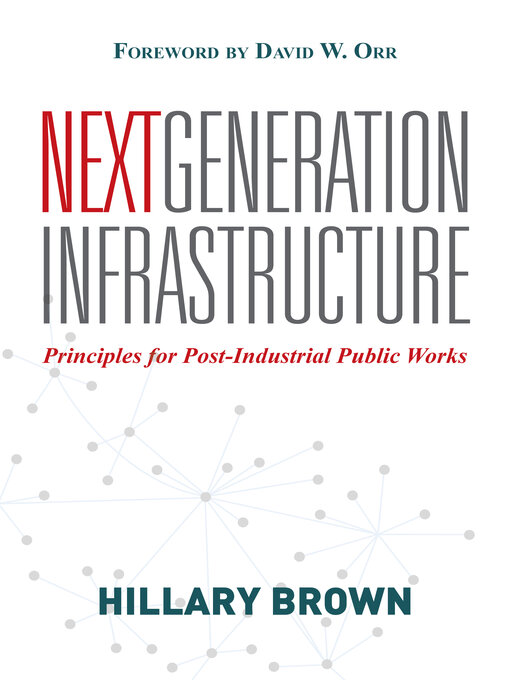
How can our complex, interdependent utilities support an urbanizing world, subject to carbon constraints and the impacts of climate change? How might these critical networks be made more efficient, less environmentally damaging, and more resilient? Such questions are at the heart of the approaches and initiatives explored in Next Generation Infrastructure. With a better understanding of the possible connections between different services, not only can inadvertent disruptions be reduced, but crosscutting benefits and lower costs will be possible. Next Generation Infrastructure highlights hopeful examples from around the world, ranging from the Mount Poso cogeneration plant in California to urban rainwater harvesting in Seoul, South Korea, to the multi-purpose Marina Barrage project in Singapore. Five bold organizing objectives are proposed that, in the hands of decision-makers and designers, will help bring about a future of multipurpose, low-carbon, resilient infrastructure that is tightly coordinated with natural and social systems.
In their conception and design, the innovative projects highlighted in Next Generation Infrastructure encourage us to envision infrastructure within a larger economic, environmental, and social context, and to share resources across systems, reducing costs and extending benefits. Through this systems approach to lifeline services, we can begin to move toward a more resilient future.
-
Creators
-
Publisher
-
Release date
May 15, 2014 -
Formats
-
Kindle Book
-
OverDrive Read
- ISBN: 9781610912020
-
EPUB ebook
- ISBN: 9781610912020
- File size: 4675 KB
-
-
Accessibility
-
Languages
- English
Why is availability limited?
×Availability can change throughout the month based on the library's budget. You can still place a hold on the title, and your hold will be automatically filled as soon as the title is available again.
The Kindle Book format for this title is not supported on:
×Read-along ebook
×The OverDrive Read format of this ebook has professional narration that plays while you read in your browser. Learn more here.