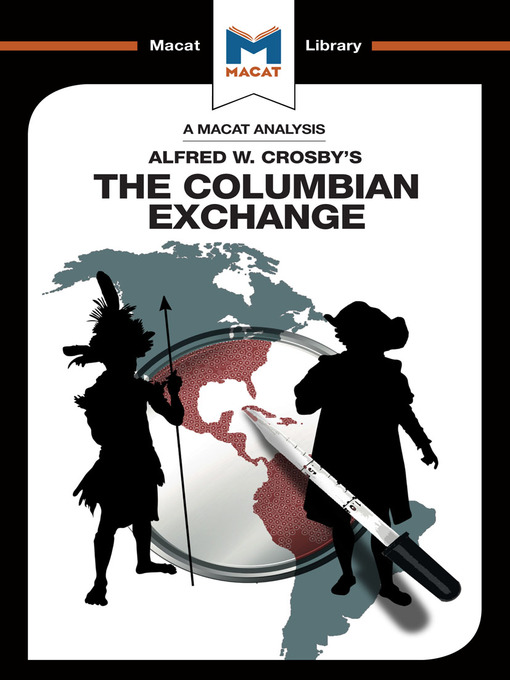
Crosby's landmark 1972 work argues that environmental factors shape our history just as much as—and sometimes more than—human factors. While earlier scholars emphasized cultural and technological factors as defining the way our world developed, Crosby claims that nonhuman factors, such as the exchange of plants, animals, and microbes between the Old and New Worlds, had greater overall impact. One of the first historians to look at the importance of the spread of food crops and diseases in relation to history, Crosby introduces the idea that human societies are the product of a wider set of biological relationships and need to be understood in these contexts.
- Headed for College? Recommended Books
- What's new?
- Popular titles
- Check these out!
- No wait, no problems
- See all ebooks collections